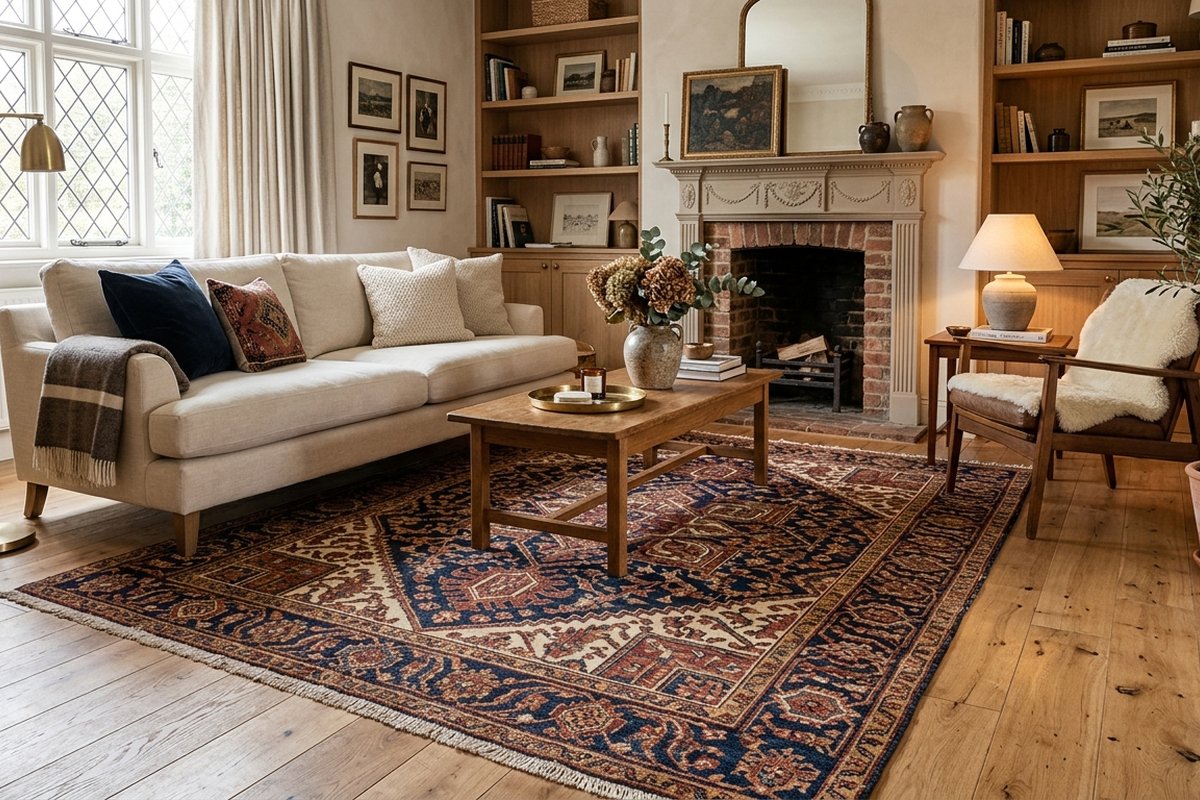
There is a reason interior designers almost always start a room with the rug. A vintage or antique rug acts as the anchor for a space, pulling together disparate colors and adding a layer of warmth, history, and texture that a new, machine-made carpet simply cannot replicate.
Whether it is a hand-knotted Persian rug in the living room or a vibrant kilim runner in the hallway, decorating with vintage textiles is the easiest way to give a home soul. Here is how to style them effectively.
Start From the Ground Up
If you are designing a room from scratch, buy the rug first. Vintage rugs feature complex color palettes that are much harder to match after you have already committed to a sofa and paint color. By starting with the rug, you can pull two or three accent colors from its weave to inform your choices for upholstery, throw pillows, and wall color, ensuring the room feels entirely cohesive.
Sizing: Bigger is Almost Always Better
The most common mistake when buying a vintage rug is choosing one that is too small. In a living room, the rug should be large enough that at least the front legs of your sofa and all chairs sit comfortably on it. If the rug just floats in the center under the coffee table, the room will feel disjointed and smaller than it actually is.
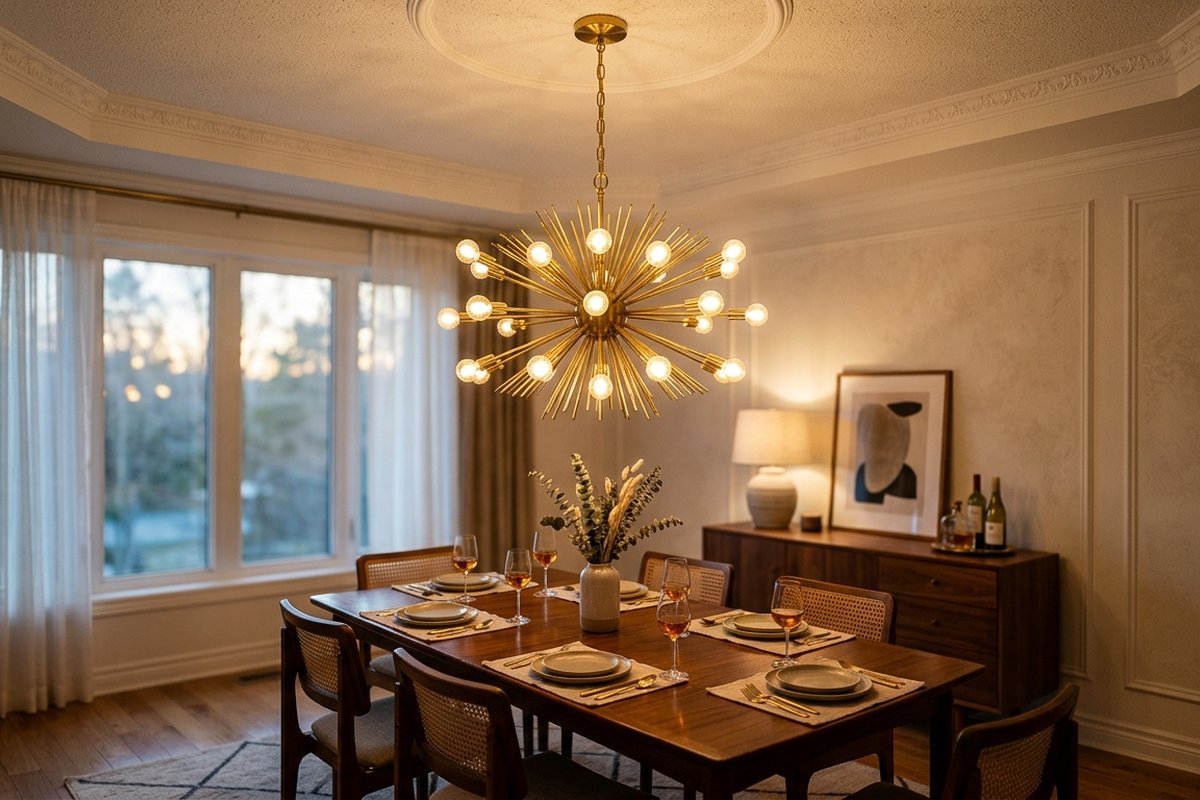
In a dining room, the rug must be large enough that when chairs are pulled out to sit down, all four legs remain on the rug (usually requiring a rug at least 8 feet wide for a standard table).
The Art of Layering
Genuine antique rugs in large sizes (like 9x12 or 10x14) can be quite an investment. A designer secret for getting the vintage look on a budget is layering. Buy an inexpensive, large, neutral jute or sisal rug to cover the floor space, and then layer a smaller, vibrant vintage rug right on top of it, centered under the coffee table.
This technique gives you the texture and color of the antique piece while providing the necessary scale for the room, and the contrast between the rough jute and the soft wool is visually stunning.
Embrace the Imperfections
Vintage rugs have lived past lives. They may have areas of low pile, slightly faded colors, or borders that are not perfectly straight. These are not flaws; they are the hallmarks of a handmade, historic item. The faded, muted tones of an aged rug are actually what make it so easy to decorate with — the colors are softened, allowing them to blend beautifully into a room without overwhelming it.
Runners Make the Hallway
Hallways and kitchens are often overlooked, treated as purely functional transition spaces. A vintage kilim runner instantly transforms these cold spaces into decorated rooms. Because hallways don't have competing furniture patterns, you can go bold with the colors and geometric patterns of a tribal runner to make a striking visual impact.
Final Thoughts
Decorating with vintage rugs is about bringing history into your daily life. By choosing the right size, layering when necessary, and letting the rug's palette guide the room, you create spaces that feel curated rather than assembled. Do not be afraid of the wear and tear — it is proof of a piece well-loved.
Explore our collection of antique rugs and textiles to find the piece that will anchor your next room.
Featured Pieces From This Guide
Ready to shop? Explore the collections featured in this article: