A room decorated entirely in a single period — whether it is 19th-century Victorian or strictly 1950s mid-century — runs the risk of looking like a museum exhibit or a movie set. The most compelling, personal interiors are those that span decades, mixing the clean, horizontal lines of modernism with the rich, carved details of traditional antiques.
Blending eras gives a room tension and depth. Here is how to mix mid-century modern pieces with older antiques without the space feeling chaotic.
The 80/20 Rule
When mixing styles, aiming for a 50/50 split usually results in a room that feels confused, as the two eras fight for dominance. Instead, establish a dominant style for about 80 percent of the room, and use the other era for the remaining 20 percent as an accent.
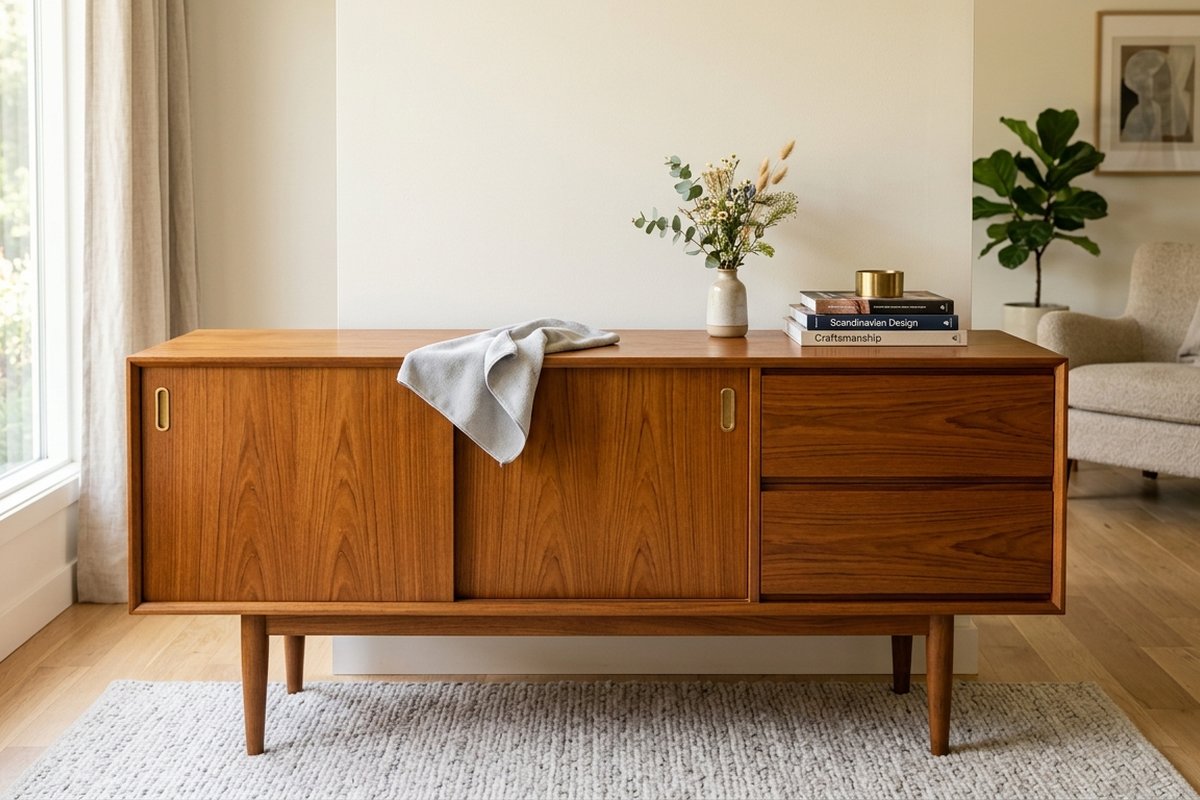
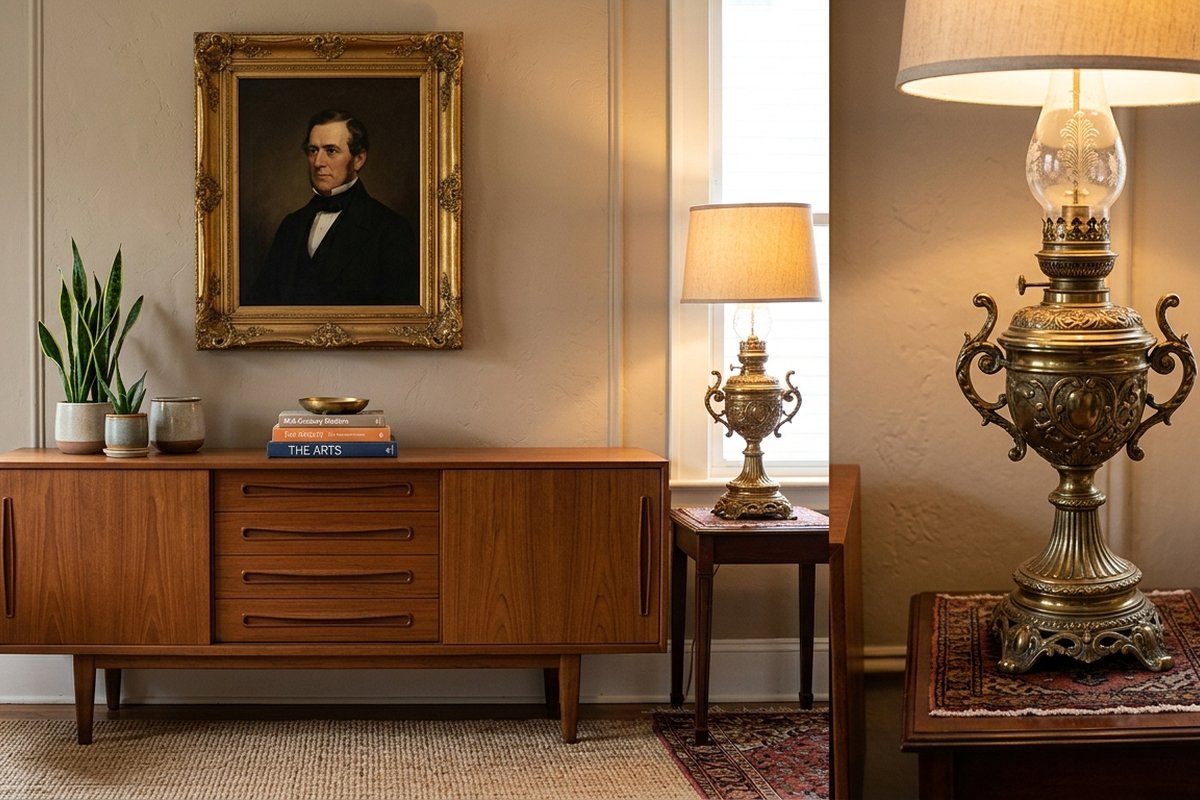
For example, a room with a sleek mid-century sofa, a glass coffee table, and a teak sideboard (the 80%) comes alive when accented with an ornate, gilded 19th-century mirror and an antique brass gas lamp (the 20%). The contrast makes both styles look sharper.
Unify With Color
You can mix furniture from wildly different centuries as long as they share a common color palette. If your traditional antique chairs have upholstery that picks up the exact same emerald green as your mid-century velvet armchair, they will look like they belong together.
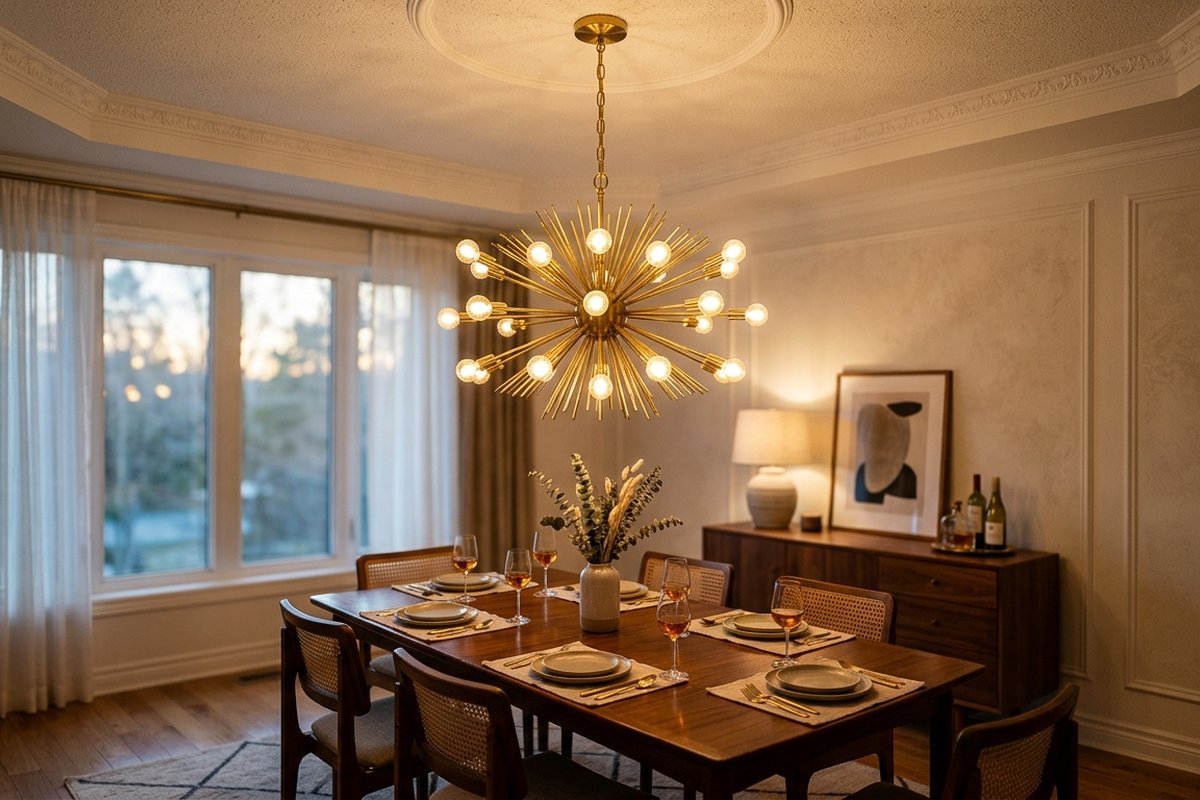
Wood tones can also unify a space. You don't need to match woods perfectly — in fact, you shouldn't — but keeping warm woods (like teak and cherry) grouped together or cool woods (like ash and pale oak) together helps bridge the gap between eras.
Pair Opposites Directly
Do not segregate your antiques to one side of the room and your mid-century pieces to the other. Force them into direct conversation. Place a sleek, chrome mid-century lamp squarely on top of an ornate, dark wood antique desk. Hang a bold, abstract modern painting directly above a traditional carved mantelpiece.
When you pair total opposites directly against each other, it looks deliberate. The clean lines of the modern piece highlight the craftsmanship of the antique, and vice versa.
Watch the Scale
The quickest way a mixed room fails is when the scale is off. Mid-century furniture tends to sit lower to the ground and has a lighter visual weight. Traditional antiques are often taller, heavier, and more imposing.
Be careful not to place a delicate, spindly mid-century chair next to a massive, dark gothic bookcase. Ensure the pieces you are mixing have similar visual weight, or balance a heavy antique on one side of the room with a similarly substantial modern piece on the other.
Use Rugs as the Bridge
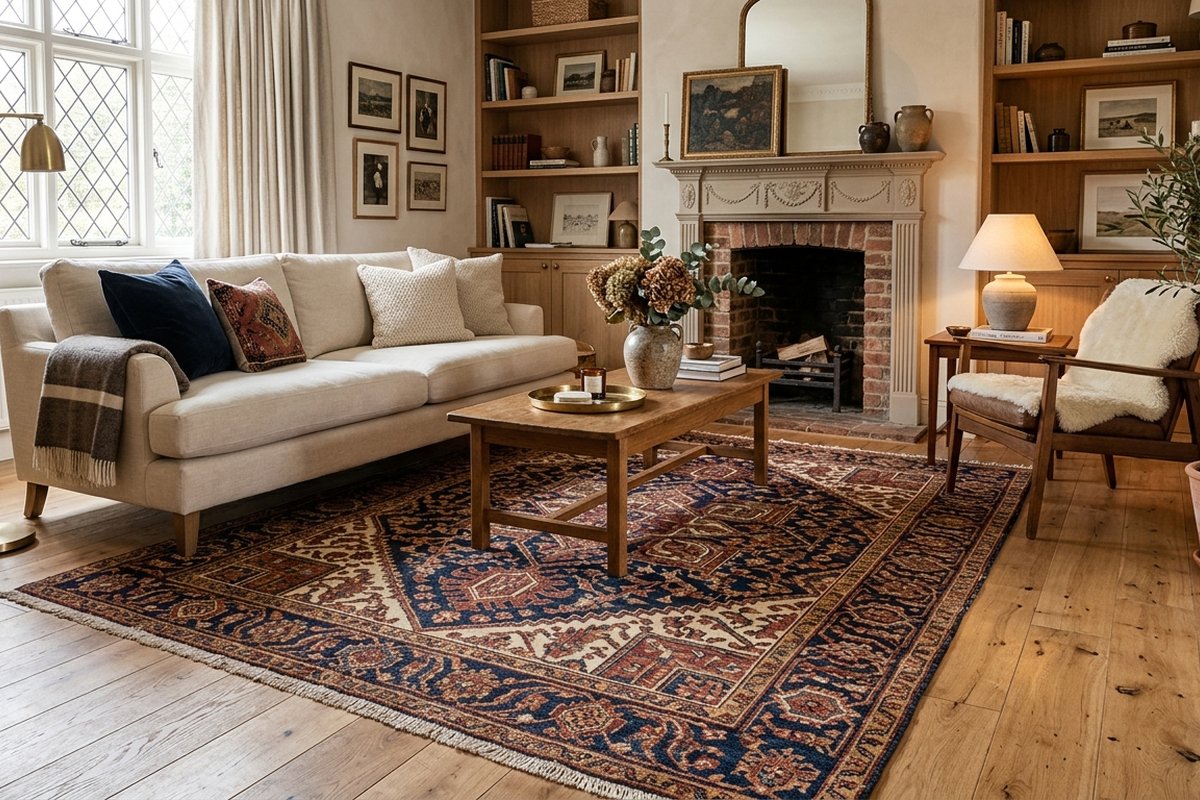
A vintage Persian or Turkish rug is the ultimate design bridge. Because antique rugs are incredibly detailed and feature a multitude of colors, they act as a neutral grounding element that welcomes both a sharp-edged modern coffee table and an ornate traditional sofa equally well.
Final Thoughts
Mixing mid-century modern with traditional antiques is about confidence. When you combine the clean functionality of modernism with the rich history of antiques, you create a space that cannot be bought out of a single catalog — you create a home that reflects a curated, personal eye.
Browse our mid-century collection and our traditional antiques to start building your own layered interior.
Featured Pieces From This Guide
Ready to shop? Explore the collections featured in this article: