If you want to fundamentally change how a room feels, change the lighting. While modern lighting often prioritizes brightness and efficiency, vintage and antique fixtures were designed to create atmosphere. The materials — solid brass, cast iron, stained glass, and chrome — cast a glow and hold a presence that modern replicas rarely match.
From Victorian parlor lamps to space-age chandeliers, incorporating vintage lighting into your home adds instant historical character. Here is what to know about choosing, styling, and safely using antique fixtures.
Chandeliers as Centerpieces
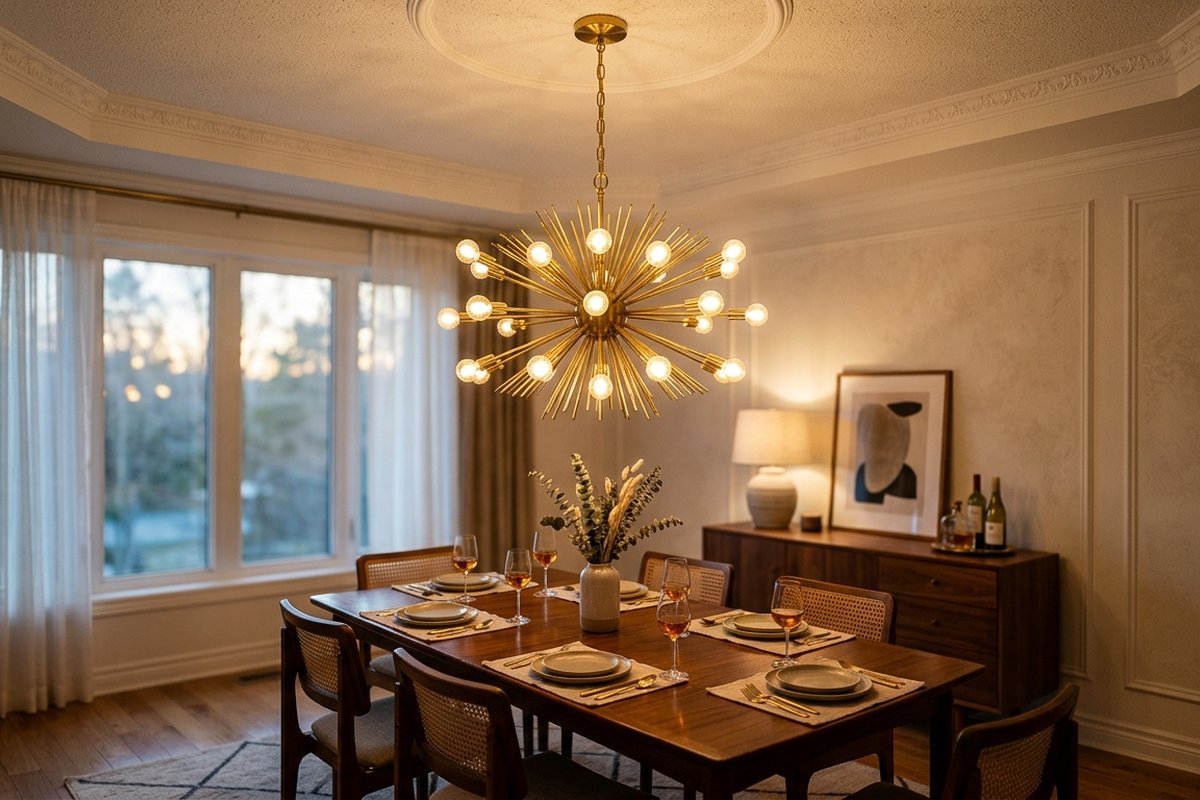
A vintage chandelier is room jewelry. Whether it is an ornate crystal fixture in a traditional dining room or a bold, atomic sputnik chandelier in a modern living space, overhead vintage lighting commands attention.
When hanging a chandelier over a dining table, a good rule of thumb is that the fixture should be about one-half to two-thirds the width of the table. Hang it so the bottom of the fixture is 30 to 34 inches above the tabletop to create an intimate glow without blocking the view across the table.
The Warmth of Brass and Bronze
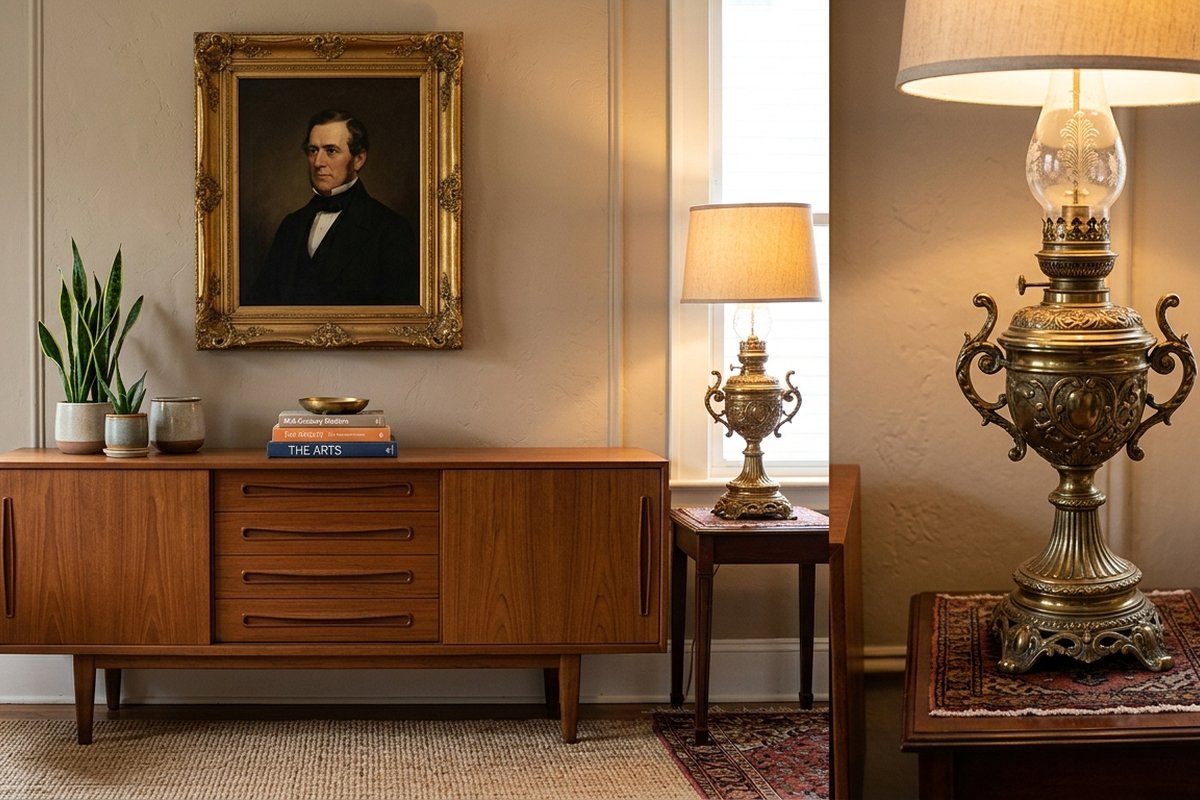
Antique lighting frequently features solid brass and bronze, materials that develop a rich, dark patina over decades. A Victorian-style brass lamp brings an immediate sense of history to a study or library.
When styling with antique brass, do not feel you need to polish it to a high shine. The darkened, aged patina is exactly what gives the piece its value and character. Mix these warm metal tones freely with other finishes in the room — a room with mixed metals feels curated and authentic.
Task Lighting with Character
Vintage task lighting proves that functional items can be beautiful. An art deco chrome desk lamp or an industrial pendant light over a kitchen island provides necessary, focused illumination while serving as a sculptural element.
Industrial lighting, with its enamel shades and exposed hardware, pairs wonderfully with rustic and farmhouse interiors, bringing a utilitarian edge that balances softer furnishings.
A Word on Safety and Rewiring
The most common concern with antique lighting is safety. If you purchase a vintage lamp found at a flea market, the cloth-wrapped wiring may be brittle or unsafe for modern outlets. However, rewiring a lamp is a straightforward and inexpensive process for a local electrician (or a confident DIYer).
At Bratton Antiques, we inspect and, when necessary, professionally rewire our vintage lighting fixtures to ensure they meet modern safety standards before they ship to you, so they are ready to plug in and enjoy.
Choosing the Right Bulbs
The bulb you choose dictates the mood of your vintage fixture. Avoid harsh, cool-toned daylight LEDs (5000K+), which ruin the warm, atmospheric quality of antique lamps. Instead, choose warm white or soft white LED bulbs (2700K to 3000K). For exposed-bulb fixtures like sputniks or industrial pendants, Edison-style LED bulbs offer the vintage visible-filament look with modern safety and efficiency.
Final Thoughts
Vintage lighting is the rare decor element that is both highly functional and deeply atmospheric. By choosing authentic fixtures, embracing aged patinas, and using warm-toned bulbs, you can illuminate your home with genuine history.
Browse our collection of restored vintage lighting to find the fixture that will completely change the mood of your room.
Featured Pieces From This Guide
Ready to shop? Explore the collections featured in this article: