There is a reason antique wood furniture has survived for generations. Pieces built a century ago were crafted with solid timber and joinery techniques meant to last lifetimes. But while the construction is robust, the finish on an antique piece is often delicate and requires a different approach to care than modern, mass-produced furniture.
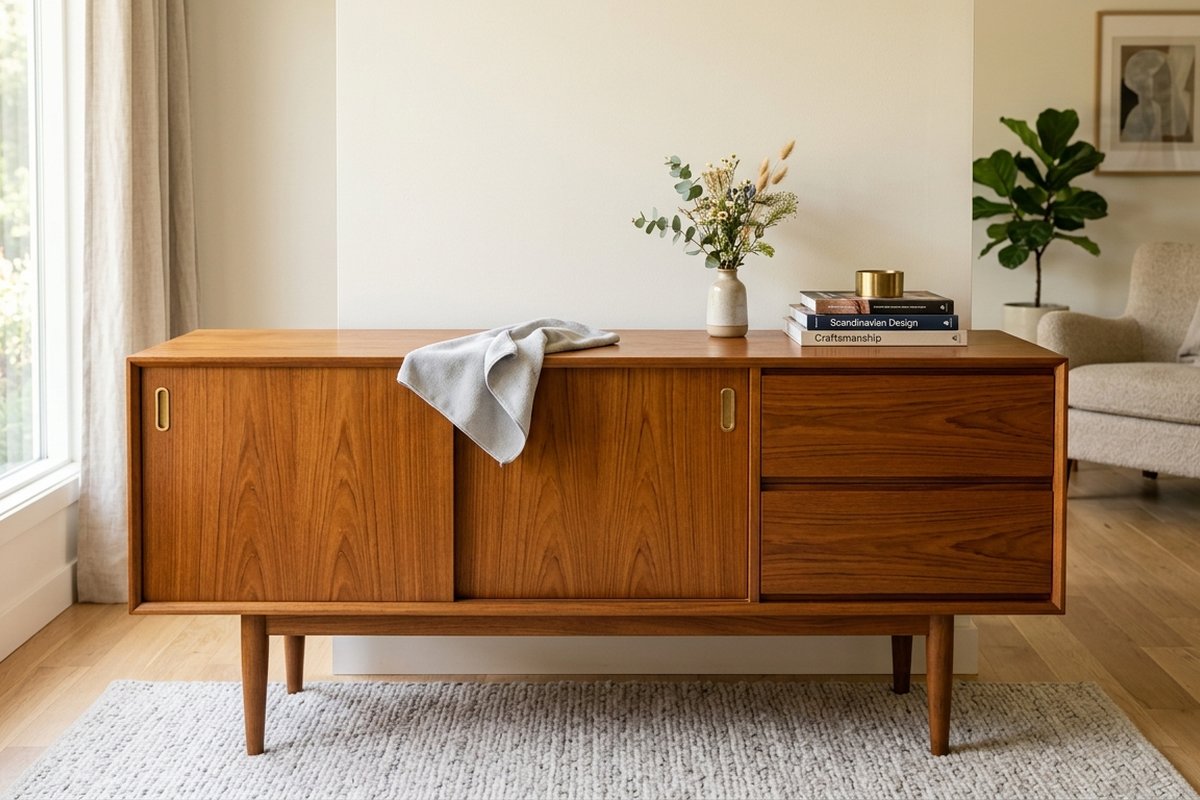
Whether you have inherited a family heirloom or just brought home a mid-century teak sideboard, proper care is what ensures it will last another hundred years. Here is exactly how to clean, polish, and protect your antique wood furniture.
The Golden Rule: Do No Harm
The most important rule in antique care is doing no harm. Modern commercial furniture sprays and polishes are often loaded with silicones and synthetic solvents. While they create a quick, high-gloss shine, they leave behind a sticky residue that attracts dust and can eventually permanently cloud or soften a vintage finish.
For genuine antiques, less is always more. You want to nourish the wood and protect the finish without stripping away the patina that gives the piece its character.
Routine Cleaning and Dusting
Ninety percent of antique furniture care is simply keeping it dust-free. Dust acts as a mild abrasive; if left on the surface, everyday use will grind it into the finish, causing micro-scratches that dull the wood over time.
Dust weekly using a soft, clean microfiber cloth or a classic lambswool duster. Always wipe in the direction of the wood grain, and avoid feather dusters, which can catch on loose veneer or splinters. If the piece is slightly grimy, dampen the cloth with distilled water — just barely damp, never wet — wipe the surface gently, and immediately buff it dry with a second clean cloth.
Waxing: The Best Protection
Unlike modern polyurethane finishes that sit on top of the wood like a plastic shell, antique finishes (like shellac, French polish, or oil) breathe. To protect them, you should apply a high-quality paste wax once or twice a year.
Beeswax or carnauba-based furniture paste wax provides a hard, protective barrier against moisture and minor scratches while enhancing the wood's natural glow. Apply a very thin, even coat using a soft cloth, let it dry to a haze (usually 15 to 30 minutes), and then buff it out with a clean cotton cloth. Resist the urge to wax too often — a twice-yearly application is plenty.
Protecting Against the Elements
Antique wood is highly responsive to its environment. Changes in humidity cause wood to expand and contract, which can lead to cracked joints or peeling veneer. Keep your home's humidity relatively stable, ideally between 40% and 50%.
Keep antique pieces out of direct, continuous sunlight, which will bleach the wood and dry out the finish. Finally, never place an antique directly in front of an active radiator, heating vent, or working fireplace. The intense, localized heat will rapidly dry out the wood, causing it to shrink and crack.
Daily Habits That Prevent Damage
The easiest way to care for an antique is to prevent damage before it happens. Always use coasters under glasses, and never place hot mugs or dishes directly on the wood, as heat can turn antique finishes cloudy white. When placing lamps, vases, or heavy decor on a vintage table, stick felt pads to the bottom of the objects to prevent scratching.
Final Thoughts
Caring for antique wood furniture does not have to be intimidating. By avoiding harsh chemicals, dusting regularly, applying a protective wax once or twice a year, and keeping the piece safe from extreme heat and moisture, you preserve both its beauty and its value. A well-cared-for antique only grows more beautiful with time.
Explore our collection of restored vintage furniture to find a piece with history that is ready for its next chapter in your home.
Featured Pieces From This Guide
Ready to shop? Explore the collections featured in this article: